Archive | Dessert RSS feed for this section

Chocolate Soufflé Cake

23 Aug

While I love summer’s bounty of stone fruits and berries, all of which make lovely pies and cobblers, I crave chocolate all year round. A reliable chocolate dessert is an item that should be on your repertoire no matter the season. Enter chocolate soufflé cake: a pillowy, simply chocolate delight that can be whipped up with just five ingredients. 

The texture of this dessert really sets it apart from the overly-dense and sticky flourless chocolate cakes I have tried. This one is soft and perfectly moist, the pieces crumbling as you remove a slice and almost melting on your tongue. The secret to this cake is in the technique: the whipped egg whites provide a beautiful lift and airiness. You know your egg whites are stiff when they hold their shape on the beater or they don’t fall when you invert the bowl. Do not fall victim to perfectionism when folding the batter together in the final step; work smoothly and efficiently just until the egg whites and chocolate are combined. Since there are so few components to this recipe, good-quality chocolate is essential. I recommend Scharffen Berger or Cordillera, both of which can be found at Whole Foods. 

Chocolate is a wonderful canvas for other flavors; you can dress this cake up according to your personal preferences. Serve it with a dollop of lightly whipped cream and fresh berries, a scoop of vanilla bean or coffee ice cream, or simply a tall glass of cold milk. 

Recipe courtesy of The Gourmandise School of Sweets and Savories 

Ingredients 
6 oz. bittersweet chocolate, chopped 
1/4 cup water 
4 egg whites 
1/2 cup granulated sugar 
5 egg yolks 
1/4 tsp salt 

1. Preheat the oven to 350 degrees F. Line the bottom of a 8-inch round cake pan with parchment paper and grease the sides with butter. 
2. Place the 1/4 cup water and chocolate in a medium bowl and melt the chocolate over a double boiler; set aside. In the bowl of a stand mixer fitted with a whisk attachment, beat the egg whites on high speed until they reach the soft peak stage. Slowly stream in 1/4 cup sugar and continue beating until stiff peaks form; set aside. 
3. In the bowl of a stand mixer fitted with a whisk attachment, beat the egg yolks, salt, and the remaining 1/4 cup sugar on high speed until the batter forms a ribbon (about 5 minutes). Add the melted chocolate to this yolk mixture and beat on medium speed for an additional minute just to incorporate the two. Fold the egg whites into this mixture in thirds, making sure not to overfold. Pour the batter into the prepared cake pan and bake for 25 minutes. The center of the cake should be moist but not raw. 

Simple Cherry Sorbet

8 Aug

Recipe courtesy of Ready for Dessert by David Lebovitz 

Ingredients 
4 cups (1 1/2 lb.) sweet cherries, stemmed and pitted
1/2 cup granulated sugar 
1 cup water 
1 tblsp lemon juice 
1/2 tsp almond extract 

1. In a large saucepan over medium-high heat, combine the cherries, sugar, water, and lemon juice. Cook, stirring occasionally, until the cherries have softened and released their juices, about 10 minutes. Remove from the heat and stir in the almond extract. Let the mixture cool completely. 
2. Transfer the cherries and their syrup to a shallow container, cover, and freeze until firm, at least two hours. Once the cherry mixture has frozen completely, remove it from the freezer, break it up, and process it in a food processor fitted with a metal blade until completely smooth. Serve right away. 

For someone who doesn’t own an ice cream maker, frozen desserts are a category I rarely venture into. So when I discovered this recipe for cherry sorbet only requiring a freezer, I knew I must make it right away. I mixed up the ingredients in a matter of minutes, popped the mixture into the freezer for a few hours, and puréed it until smooth. Voilà! This dessert is simple, delicious, and can be endlessly adapted. You could use yellow peaches instead of sweet cherries and replace the almond extract with vanilla; pineapples and coconut extract would make for a lovely tropical combination. You could purée the fruit syrup before freezing, pour it into popsicle molds with a couple fresh cherry halves, and make homemade fruit pops. For a granita: freeze the sorbet as directed, crush it up with some shaved ice, add a splash of pure cherry juice, and top with a few sprigs of mint. Or grind two parts ice with one part sorbet for a refreshing slushy. No matter how you choose to prepare this quintessential summer dessert, I can guarantee that it will be a success. 

Ricotta Cheesecake with Homemade Graham Cracker Crust

27 Jul

Filling courtesy of Ready For Dessert by David Lebovitz, crust courtesy of Miette by Meg Ray


Ingredients 
For the graham cracker crust: 
1 1/2 cups all-purpose flour 
1/3 cup whole wheat flour 
1/2 tsp kosher salt 
Heaping 1/4 tsp ground cinnamon
2/3 cup unsalted butter, at room temperature 
1/2 cup firmly packed light brown sugar 
2 tblsp honey
1 tblsp melted butter 


For the ricotta filling:
1/2 cup golden raisins
3 tblsp Marsala wine or port 
2 lb good-quality ricotta cheese 
2/3 cup granulated sugar 
1/4 cup heavy whipping cream 
5 large eggs, at room temperature 
3/4 tsp aniseed or fennel seed 
1 tblsp all-purpose flour 
1 tsp vanilla extract 
Grated zest of 1 orange 


1. To make the graham crackers: sift together both flours, salt, and cinnamon into a medium-sized bowl and set aside. 
2. In the bowl of a stand mixer fitted with a paddle attachment, combine the 2/3 cup butter, brown sugar, and honey and beat until fluffy, about 5 minutes. Add the sifted dry ingredients to the butter mixture in three additions, beating until just combined after each addition. Wrap the dough tightly in plastic wrap and refrigerate for at least 30 minutes before rolling, or for up to two days. 
3. Preheat the oven to 350 degrees F. Line a baking sheet with parchment paper. Once the dough has cooled, roll it out to 1/4-inch thickness on a lightly floured work surface. Cut out the graham crackers using a 3 1/4-inch round cookie cutter and arrange them on the prepared baking sheet, placing each about 1/2 inch apart. Bake the cookies until they are golden brown, about 12 to 15 minutes. Remove the cookies from the oven and transfer them to a wire rack to cool completely. 
4. To make the crust, place 12 of the baked and cooled graham crackers in a food processor and pulse at 5-second intervals until fine crumbs form. Transfer the crumbs to a separate bowl and combine them with the melted butter. Press the crumbs into an even layer in the bottom of a 9-inch springform pan. Bake the crust until dark golden brown and firm, about 10 to 12 minutes. Remove from the oven and allow the crust to cool completely. 
5. To make the filling: in a small saucepan, bring the raisins and Marsala or port to a boil. Remove the pan from the heat, cover, and set aside for about one hour. In a large bowl, mix together the ricotta, sugar, and cream until well combined. Stir in the eggs one at a time. 
6. Crush the aniseed or fennel seed in a mortar and pestle or seal them inside a plastic bag and crush them with a rolling pin. Add the crushed seeds to the ricotta mixture and stir to combine. Stir in the raisins and any unabsorbed liquid, along with the flour, vanilla, and orange zest. Scrape the mixture into the prepared springform pan and bake the cake until it feels barely firm and the top is golden brown, about one hour. Remove the cake from the oven and let it cool completely. 
7. Run a knife around the sides of the cake to help loosen it from the pan and release the sides of the springform.


          As David Lebovitz describes it in his book, “American cheescake is to Italian cheesecake what slouching around the house in a sweatshirt and jeans is to stepping out on the town in a tailored Armani suit.” Unlike classic New York cheesecake, this Italian rendition uses airy ricotta versus dense cream cheese and sour cream. The filling contains notes of refined flavors such as orange zest, golden raisins, aniseed and a splash of vanilla extract that ties them all together. 
          When I first viewed the recipe, I loved the idea of a leaner, more sophisticated cheesecake but still wanted to maintain one aspect of the traditional American version we know and love: the graham cracker crust. With that in mind, I set off to make some spectacular homemade graham crackers to match the quality of the filling. You can skip this step and substitute store-bought cookies, but I highly encourage you to take the long route as the crust is really what elevates this cake to the next level. And on a related side note, the graham crackers are fabulous on their own: buttery, crisp, and sprinkled with cinnamon. 
          As expected, the final product was a hit with all of my dinner party guests. After a filling summer barbecue, everyone appreciated the lightness and subtle sweetness of the dessert. The only adaptation I might make next time around is to puree the golden raisins after they have been infused with the Marsala wine to achieve a smoother consistency.

Berry Cream Cheese Tart with Chocolate

12 Jul
Tart filling courtesy of The Sun, crust courtesy of Annie’s Eats

Ingredients 
For the crust:
1 large egg yolk
1 tbsp heavy whipping cream 
1/2 tsp vanilla extract 
1 1/4 cups all-purpose flour, plus more for dusting the work surface 
2/3 cup confectioner’s sugar 
1/4 tsp salt 
8 tbsp cold, unsalted butter, cut into 1/2-inch cubes 

For the filling: 
4 oz. semi-sweet chocolate
8 oz. cream cheese, softened 
1/4 cup granulated sugar 
1 cup heavy whipping cream 
12 oz. mixed berries 

1. To make the tart shell, whisk together the egg yolk, cream, and vanilla in a small bowl; set aside. Place the flour, sugar, and salt in a food processor and process briefly to combine. Scatter the butter pieces over the flour mixture; process to cut the butter into the flour until the mixture resembles coarse meal, about 15 one-second pulses. With the machine running, add the egg mixture and process until the dough just comes together, about 12 seconds. Turn the dough onto a sheet of plastic wrap and press into a 6-inch disc. Wrap the dough in plastic wrap and refrigerate it for at least one hour or up to 48 hours.
2. Remove the dough from the refrigerator.  (If refrigerated for more than an hour, let stand at room temperature until malleable.)  Unwrap and roll the dough out on a lightly floured surface to a 13-inch round. Transfer the dough to a 9-inch tart pan. Mold the dough to the sides of the tart pan and remove the excess off the top. Set the dough-lined tart pan on a large plate and freeze for 30 minutes. 
3. Meanwhile, adjust an oven rack to the middle position and preheat the oven to 375 degrees.  Set the dough-lined tart pan on a baking sheet, press a 12-inch square of foil into the frozen shell and over the edge, and fill with pie weights. Bake for 30 minutes, rotating halfway through the baking time.  Remove from the oven and carefully remove the foil and weights. Continue to bake until deep golden brown, 5-8 minutes longer. Transfer the shell to a wire rack to cool completely.
4. Melt the chocolate in the top of a double-boiler over simmering water. Spread the chocolate in a thin, even layer over the bottom of the cooled tart shell, reserving some chocolate for drizzling. Keep the remaining chocolate heated over hot water to use later. Refrigerate the coated tart shell until the chocolate hardens. 
5. In the bowl of a stand mixer, cream the sugar and cream cheese until fluffy. Beat in the whipping cream. Spread the cream cheese mixture into the cooled tart shell and chill for one hour. Arrange the berries on top of the filled tart, starting on the outside and working toward the center. Drizzle the reserved chocolate over the top of the berries, if desired. Chill the tart until you are ready to serve. 

For my family’s Fourth of July get together last week, the dessert spread was a group effort. My sister and I baked a fabulous Ricotta Cheesecake courtesy of David Lebovitz, my cousin contributed a decadent Chocolate Pudding Pie, and my aunt whipped up her famous Berry Cream Cheese Tart. I first tried this dessert at another summer barbecue a couple years back and immediately loved it. The combination of the buttery, tender crust with the rich cream cheese filling and fresh berries is simply irresistible. The dark chocolate shell adds a subtle note of bitterness and ties the whole tart together. In celebration of The Fourth, my aunt opted for a patriotic red, white, and blue star design. However, this dessert would be appropriate for any special occasion throughout the seasons and you can use whichever berries you prefer. 

Conquering the French Macaron

28 Jun
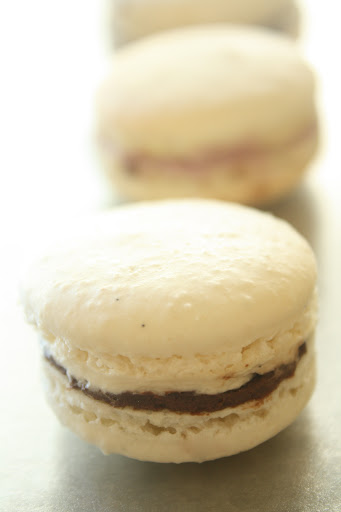
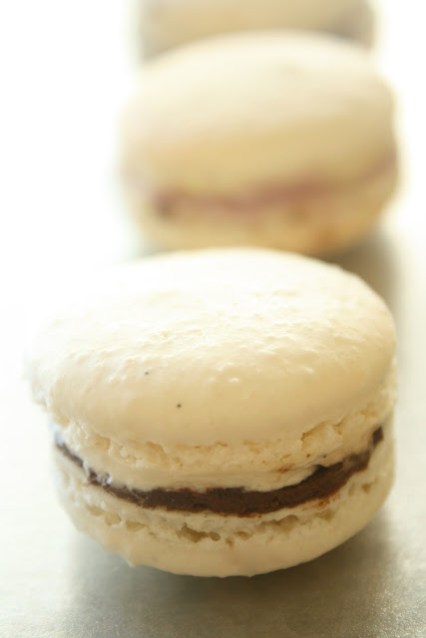
Vanilla bean shell with orange blossom buttercream and dark chocolate ganache.
Vanilla bean shell with black currant buttercream.

Recipe courtesy of The Gourmandise School

Ingredients
For the cookies:
140 g egg whites (about 4) 
80 g vanilla sugar (1/3 cup)
40 g powdered sugar (2 cups)
3 g egg white powder (1/2 tsp)
180 grams almond flour (scant 2 cups)
1 tsp cream of tartar
A pinch of salt 

Yields around 50 shells

For the buttercream:
5 egg whites 
1 lb unsalted butter, cut into chunks 
1 cup granulated sugar 
3 tblsp vanilla extract 
A pinch of salt

1. Line two baking sheets with silicone baking mats or parchment paper. 
2. Place the almond flour, salt, and powdered sugar in a food processor. Pulse until the ingredients are fully combined into a single powder. 
3. In the bowl of a stand mixer fitted with a whisk attachment, beat the egg whites, egg white powder, and cream of tartar on medium-high speed until they reach the soft peak stage. Reduce the speed of the mixer and slowly add the vanilla sugar and continue beating until the stiff peak stage. 
4. Fold the dry ingredient “powder” into the egg whites in three stages, folding until the mixture forms a  thin ribbon. Transfer the mixture to a pastry bag fitted with a large, round tip. Pipe 1-inch circles, about a 1/2-inch thick, spacing the cookies 1 inch apart. Allow the cookies to rest uncovered at room temperature for 30 minutes. While the cookies are resting, preheat the oven to 350 degrees. 
5. The cookies are reading to bake when they have lost their shine and are matte on the tops. Place the cookies in the oven and lower the temperature to 300 degrees. Bake for 15 minutes. Allow the cookies to cool on the sheets for 10 minutes before removing them. 
6. To make the buttercream, fill a medium sauce pot 1/3 of the way with water and bring to a simmer. Place the sugar, salt, and egg whites in the bowl of stand mixer.  Holding the bowl over the saucepot, whisk the contents until the mixture feels hot to the touch. Place the bowl on the stand mixer and beat with the whisk attachment until stiff peaks form. Once the outside of the bowl has reached room temperature, add the butter in small pieces. Add the vanilla. Switch to the paddle attachment and beat until the buttercream is smooth.
7. To assemble the macarons, smear 1/2 teaspoon buttercream onto the flat side of one cookie of each pair. Sandwich together with the corresponding shell, pushing the filling to the edges. Wipe off the excess buttercream from the edges. Ideally, the macarons should be consumed the day they are filled. If not, place the filled macarons in the freezer and defrost fully at room temperature before eating. 

Notes:
You can replace 50% of the almond flour with pistachios, hazelnuts, or pecans to make pistachio, hazelnut, or pecan macarons. Grind them in the food processor with the other dry ingredients and proceed with the same recipe instructions. 
The buttercream recipe can fill about 200 macarons. I divided the batch into thirds and made each a different flavor. For example, add 4 tablespoons black currant puree to a third of the plain buttercream for a black currant variation. I created orange blossom and rose variations by adding 3/4 of a teaspoon of orange blossom water and rosewater to a third of the buttercream. For a richer, more sinful flavor, you could add a splash of amaretto or coffee lacquer. I highly encourage you to get creative with your flavor choices as the possible adaptations are endless. 

I am a pretty serious macaron connoisseur. I have visited the world’s finest macaron purveyors, from La Durée and Pierre Hermé in Paris, to Miette in San Francisco, and The French Corner Cafe in Palm Springs. Through my travels, I have identified three qualities that my fantasy French cookie should possess. 
          1. A light, barely crunchy shell. The macaron’s exterior should be slightly crisp, but airy enough on the inside that you can sink your teeth into it.
          2. Fluffy filling. The filling serves as the glue that binds the macaron together, uniting two seemingly plain shells to create a single, magical partnership. The buttercream’s texture should be cloud-like and not overly sweet, complementing the cookie without overshadowing its earthy flavor. 
          3. Natural presentation. I am repelled whenever I walk into a bakery and view a pastry case stocked with macarons ranging from every color of the rainbow. I cannot help but imagine the artificial dyes required to produce cookies in hues such as neon green and sky blue. Macarons should be presented in their natural form, their nutty, organic origins embraced rather than disguised in seeping colors. 

While the cookies I had sampled over time had been delicious and unique in their own way, none merited the title of “The Perfect Macaron.” That was until last week, when I created macarons for the first time in a pastry class at The Gourmandise School of Sweets and Savories, located in Santa Monica, CA. These cookies are truly incredible. Upon first bite, the macaron not only satisfied my main requirements, but exceeded expectations entirely. Both flavor and texture are spot-on, the shape dainty and bite-sized. The recipe is also widely adaptable, allowing you to experiment with multiple flavor combinations while using the same base ingredients and method. 

I have to admit, I do not think such a stellar outcome could have been achieved had I not taken the class. The teachers demonstrated the process step-by-step, supervising the students as we completed the same tasks individually. On the first batch of cookies, I was hesitant and unsure of my movements, constantly pestering the instructors with minute questions. However, by the second round, I began to develop a rhythm and moved more swiftly through each step. The only way to understand the proper consistency for every component is through trial and error. If you are hesitant to attempt homemade macarons for fear of failure, I highly encourage you to try this recipe. While the first group of cookies may not be flawless, you learn the most from observing mishaps along the way. If you are an experienced baker, this project is an absolute must.

For all the L.A. foodies, I strongly recommend visiting The Gourmandise School. The environment is airy and uplifting and the instructors are educated and helpful. The classes are just the right size: intimate enough that you receive personalized attention while large enough that you have enjoyable company. The School offers a wide variety of classes to choose from; everything from gluten-free desserts to ethnic fare. 

Design a site like this with WordPress.com
Get started